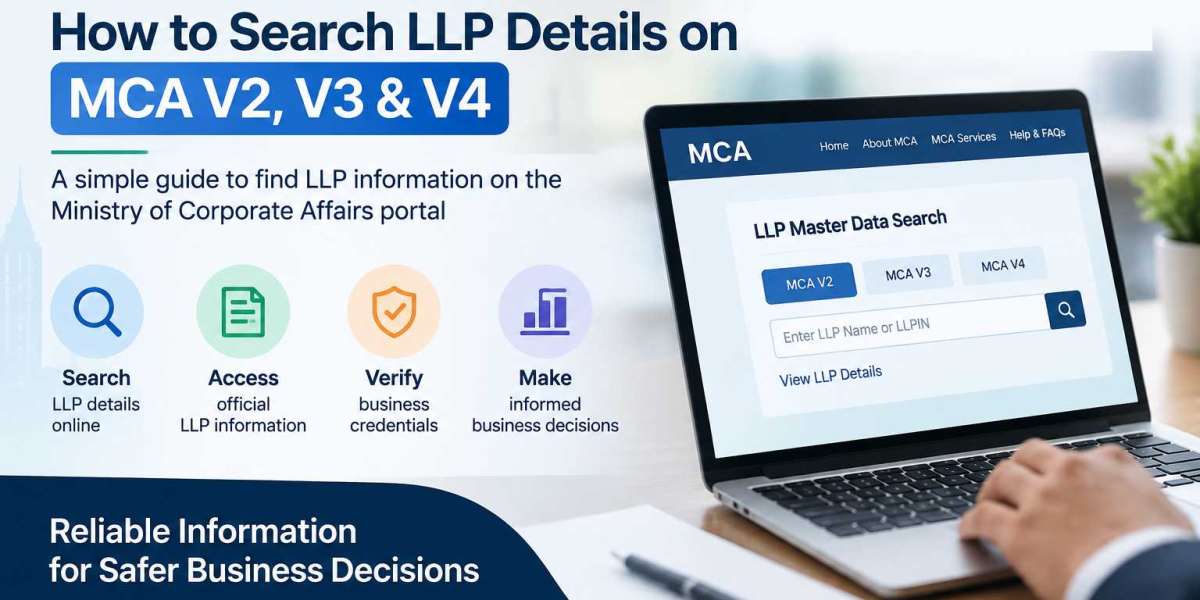

Verifying a company before starting a business relationship is an important part of modern corporate due diligence. Whether a business is onboarding a new customer, evaluating a supplier, considering a partnership, or reviewing an existing account, accurate company information can help establish the identity of the organization involved.
In India, the Ministry of Corporate Affairs (MCA) provides corporate information through its digital services. With the introduction of the MCA V3 platform, users have access to updated digital processes and services for interacting with MCA records.
For businesses, MCA V3 Master Data can be an important reference when checking company information. It can help users review corporate details and cross-check information supplied by a company against available official records.
However, company verification involves more than checking whether a company exists. Businesses should understand what MCA information can establish, what it cannot establish, and how it can be combined with other due diligence checks.
What Is MCA V3?
MCA V3 refers to the updated version of the Ministry of Corporate Affairs' digital platform for corporate filing and related services.
The platform was introduced as part of MCA's efforts to modernize and improve its digital ecosystem. It provides users with access to various MCA services through an updated interface and process structure.
For businesses and professionals, the MCA platform is relevant because corporate records and services can be used to obtain or verify important information about registered entities.
The term MCA V3 Master Data is commonly used to describe company master information accessed through the MCA's current digital environment.
What Is MCA Company Master Data?
Company Master Data contains basic information associated with a company registered with the MCA.
Depending on the entity and information available, this may include details such as:
Corporate Identification Number (CIN)
Company name
Date of incorporation
Company category
Company class
Registered office address
Authorized capital
Paid-up capital
Company status
Other available corporate particulars
Some related corporate information may also be available through MCA services.
The purpose of reviewing these details is to establish a clearer understanding of the legal entity and compare official records with information supplied by the business.
Why Is MCA V3 Master Data Important for Company Verification?
Businesses frequently receive company information from customers, suppliers, distributors, contractors, and potential partners. While these details may be accurate, relying exclusively on self-provided information can leave gaps in the verification process.
MCA records provide an additional reference point.
For example, suppose a new corporate customer provides its registered name, CIN, and address during onboarding. A business can compare these details with the relevant MCA records. If the information matches, it provides additional confirmation of the company's registered identity.
If differences are found, the business can investigate them before proceeding.
This does not mean that every discrepancy indicates a problem. Companies can change their registered offices, names, directors, or other corporate particulars. The purpose of verification is to identify differences that may require clarification.
Understanding the Corporate Identification Number
The Corporate Identification Number, or CIN, is one of the most useful identifiers when verifying an Indian company.
A CIN is associated with a particular company and can help distinguish it from other businesses with similar names.
When conducting company verification, using the CIN can reduce the possibility of reviewing the wrong corporate entity.
For example, two businesses may have similar names but completely different corporate identities. Searching by CIN provides a more precise way of identifying the relevant company record.
Businesses should therefore record the CIN as part of their corporate customer or supplier information where applicable.
Checking the Company Name
The registered company name is another important verification point.
Many businesses operate using a brand name that differs from their legal corporate name. Therefore, businesses should understand the distinction between a trading or brand name and the registered legal entity.
When reviewing MCA information, compare the official company name with names appearing on:
Contracts
Invoices
Purchase orders
Quotations
Tax documents
Bank documentation
Business correspondence
A difference may be completely legitimate, but it should be understood before an important transaction is completed.
Reviewing the Incorporation Date
The incorporation date provides information about when the corporate entity was registered.
This can be useful when reviewing a company's history or performing preliminary due diligence.
For example, a company may have been operating under a particular brand for many years, while the legal entity currently being used for contracts was incorporated more recently. Understanding this distinction can help businesses maintain accurate records.
The incorporation date should not, however, be interpreted as proof of business experience or financial strength.
Understanding Company Status
Company status is another important part of company verification.
The status recorded in MCA information can provide insight into how the company is currently reflected in corporate records.
Businesses should carefully review the specific status shown and understand its meaning rather than making assumptions based simply on the presence of a company record.
For credit teams, procurement departments, and compliance professionals, company status can be one of several checkpoints used before onboarding or continuing a business relationship.
Registered Office Verification
The registered office address can also be compared with information supplied by a company.
For example, if a supplier provides an address that is significantly different from its registered office, the business may want to understand whether the supplier operates from another location or whether the corporate address has changed.
An address difference does not automatically indicate inaccurate information.
Businesses may have corporate offices, branch offices, warehouses, manufacturing locations, and other operating sites that differ from their registered office.
Therefore, the address should be considered as part of the overall company verification process.
Directors and Corporate Information
Director-related information can also be relevant when researching a company.
Available corporate records can help identify individuals associated with the company in official capacities. This can provide useful context when conducting corporate due diligence.
However, director information should be interpreted carefully. The presence of a person in corporate records does not by itself establish their financial position, reputation, business performance, or suitability for a particular transaction.
Where director background is material to a business decision, additional appropriate checks may be required.
Authorized and Paid-Up Capital
MCA company information can include authorized and paid-up capital details.
Authorized capital generally relates to the maximum share capital a company is permitted to issue under its corporate framework, while paid-up capital relates to the amount of share capital actually paid by shareholders.
These figures can provide useful corporate context.
However, businesses should avoid treating capital figures as a direct measure of profitability or creditworthiness. A company's financial position depends on many other factors, including revenue, expenses, assets, liabilities, cash flow, and payment obligations.
How Businesses Can Use MCA V3 Master Data
MCA information can support several business processes.
Customer Onboarding
Before creating a new corporate customer account, businesses can verify the customer's legal identity and basic corporate details.
This can help ensure that invoices, contracts, and credit records are associated with the correct legal entity.
Supplier Verification
Procurement teams can use company information to verify suppliers before entering into significant commercial relationships.
This is particularly relevant where contracts involve advance payments, long-term commitments, or substantial purchase volumes.
Credit Assessment
Credit departments can incorporate company verification into their customer assessment procedures.
MCA data can establish basic corporate information before the business evaluates financial statements, credit reports, payment history, trade references, and other credit indicators.
Business Partner Due Diligence
Companies can also use MCA information when evaluating potential joint-venture partners, distributors, service providers, or strategic partners.
The data can provide a basic corporate reference point before more detailed due diligence is conducted.
MCA V3 Master Data and Credit Risk Management
Company verification and credit risk assessment are related but different processes.
MCA V3 Master Data can help answer basic questions about a corporate entity, such as its legal identity, incorporation details, registered office, and recorded status.
It does not independently determine whether a company will pay its invoices on time.
For credit management, businesses may need to combine MCA information with:
Financial statements
Credit reports
Payment history
Trade references
Outstanding liabilities
Banking information
Tax information
Relevant legal records
Using multiple information sources can provide a more comprehensive view of the counterparty.
Using MCA Information in Debt Recovery
MCA company information can also be useful when managing overdue corporate accounts.
Before taking further action on an overdue account, a business or credit management team may need to confirm the exact legal entity associated with the outstanding obligation.
Accurate company information can help ensure that internal recovery records, correspondence, and documentation refer to the appropriate corporate entity.
However, debt recovery should always be conducted according to applicable contractual and legal requirements. MCA information is a verification resource rather than a complete recovery strategy.
Common Mistakes When Using MCA V3 Data
One common mistake is relying solely on a company name. Similar names can make it difficult to identify the correct entity, so the CIN and other available identifiers should be checked.
Another mistake is assuming that MCA information provides a complete picture of a company's financial health. It does not.
Businesses should also avoid treating a single discrepancy as proof of wrongdoing. Corporate information can change over time, and differences may have legitimate explanations.
Finally, users should pay attention to the date and source of the information being reviewed, especially when the data is being used for a significant financial or legal decision.
Limitations of MCA V3 Master Data
MCA V3 Master Data is valuable for corporate verification, but it has limitations.
It primarily provides corporate and registration-related information. It does not necessarily establish:
Whether a company is profitable
Whether it has strong cash flow
Whether it pays suppliers on time
Whether it has a good commercial reputation
Whether it will repay a particular debt
Whether a business transaction is financially safe
These questions require additional information and analysis.
For significant transactions, businesses should consider conducting broader financial, legal, tax, ownership, and credit due diligence.
Creating a Structured Verification Process
Businesses that regularly work with corporate customers and suppliers can benefit from creating a consistent verification procedure.
The process can begin by collecting the legal company name and CIN. These details can then be compared with MCA records and supporting documentation.
Companies can maintain verified information in their internal customer or supplier databases and periodically review important corporate changes.
For credit departments, this process can be integrated into customer onboarding, credit-limit approval, periodic account reviews, and receivables management.
A structured process reduces reliance on informal information and helps maintain more accurate corporate records.
Conclusion
MCA V3 Master Data provides businesses with a useful reference for verifying important information about Indian companies. Details such as the CIN, company name, incorporation date, registered office, company status, directors, and capital information can help organizations establish the identity and basic corporate profile of a business.
However, MCA information should not be considered a complete risk assessment. Company registration details alone cannot determine financial strength, creditworthiness, payment behavior, or future performance.
The most useful approach is to combine MCA company information with financial, credit, legal, tax, and commercial checks appropriate to the transaction.
For businesses involved in customer onboarding, supplier management, credit control, or corporate due diligence, incorporating MCA V3 Master Data into a structured verification process can help create more reliable company records and support informed business decisions.